
Prakriti — Your Constitution
Each individual has a unique constitution that influences physical characteristics, tendencies and responses to diet, lifestyle and environment.
Understanding Ayurveda. Applying it to everyday life.
Ayurveda, often described as the science of life, looks at health through the relationship between the individual, their constitution, environment and way of living.
Its principles help us understand why each person is different, what influences balance and how everyday choices can support wellbeing.
Learn More About AyurvedaEach individual has a unique constitution that influences physical characteristics, tendencies and responses to diet, lifestyle and environment.
Vata, Pitta and Kapha represent functional principles within Ayurveda. Their relative balance varies from person to person and may change with age, lifestyle, diet, season and other influences.
Agni represents the body’s capacity to digest, assimilate and transform what we consume. Ayurveda considers balanced Agni important to overall wellbeing.
Ayurveda describes the body’s tissues as Dhatus and its natural waste products as Malas. Their appropriate nourishment, formation and elimination are considered important aspects of balance.
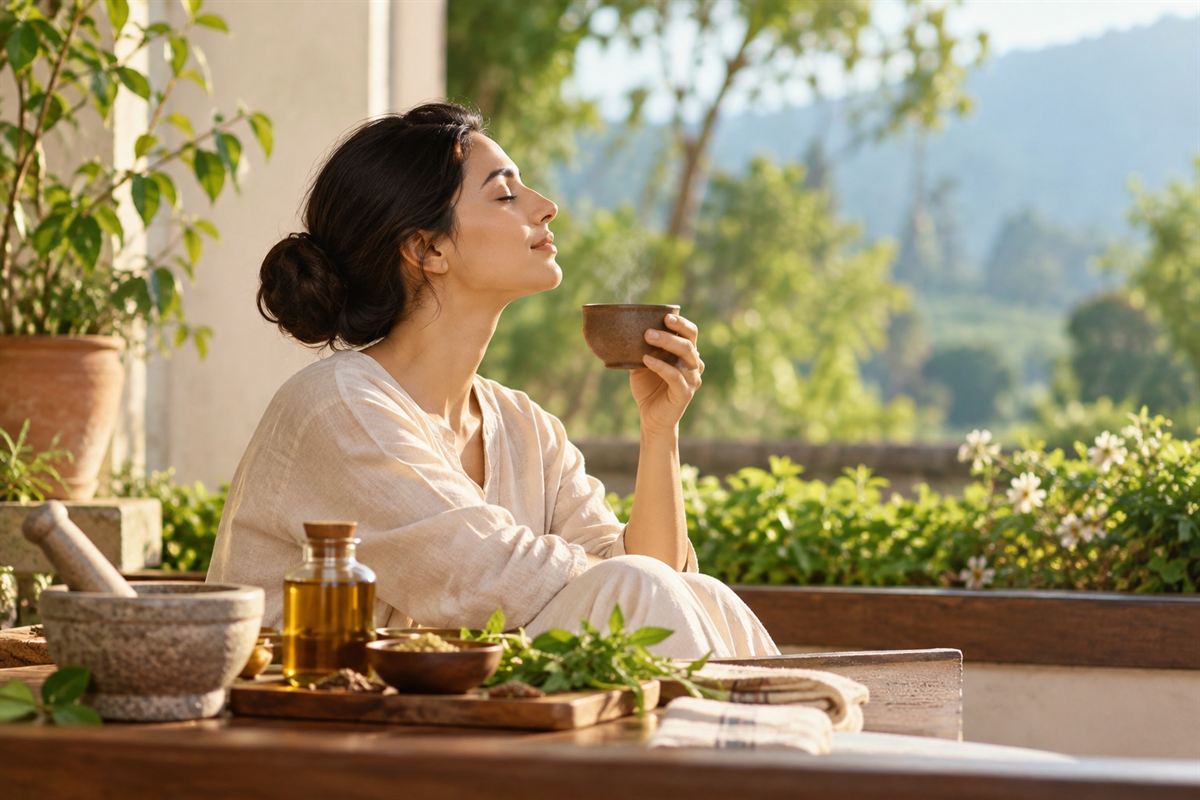
Ayurveda is not limited to therapies. It offers a way of understanding how our daily routines, food, sleep, activity and environment influence wellbeing.
Through principles of Dinacharya and Ritucharya, Ayurveda encourages us to align our habits with our individual constitution, stage of life and the changing rhythms of nature.
Encourages regularity in everyday routines, including waking, eating, activity, rest and sleep, helping create rhythm and stability in daily life.
Recognises that changes in season influence the body and its needs, encouraging appropriate adjustments in food, activity and daily routines.
Living in balance is therefore not about rigid rules, but about developing awareness, regularity and a way of life that moves in greater harmony with oneself and with nature.
In Ayurveda, food is fundamental to health and wellbeing. What nourishes one individual may not suit another; food is therefore understood in relation to constitution, Agni (digestive and metabolic fire), age, season and present state of balance. Ayurveda considers not only what we eat, but how food is prepared, digested and assimilated.
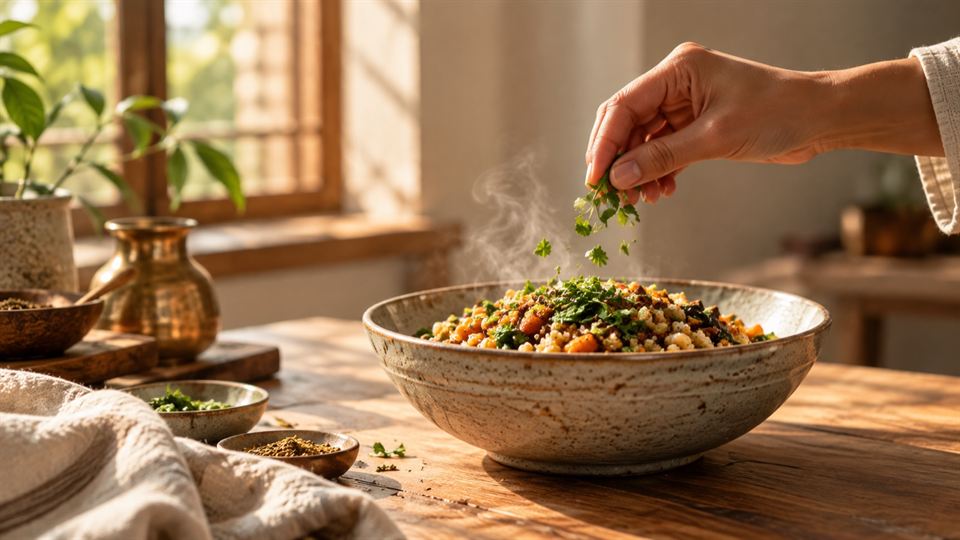
Food is understood in relation to your constitution, Agni, age, season and present state of balance.

Ayurveda recognises Shad Rasa — the six tastes: sweet, sour, salty, bitter, pungent and astringent — and their appropriate place in a balanced diet.
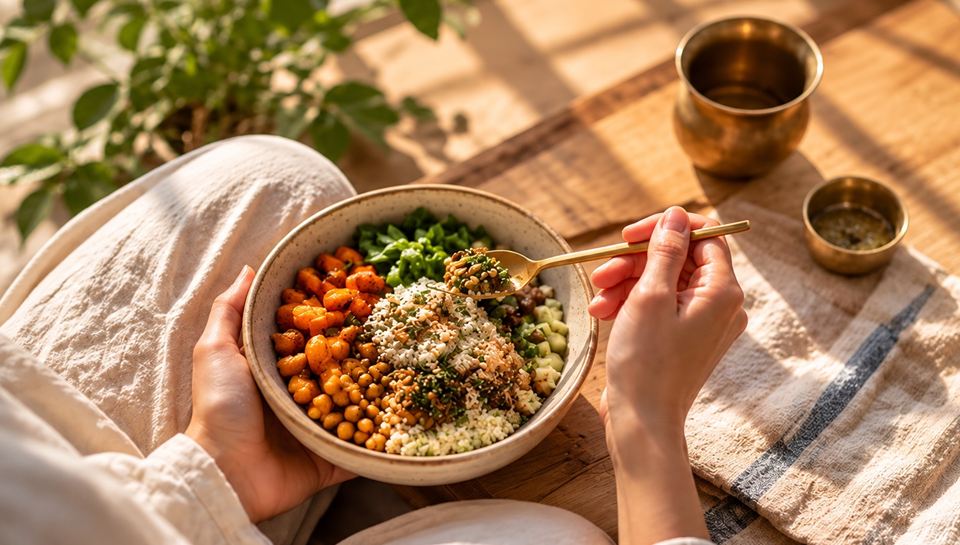
The emphasis is on developing a conscious relationship with food — what we eat, how and when we eat, and the awareness with which we eat.
Nourishment is personal. Eating well begins with understanding what is right for you.
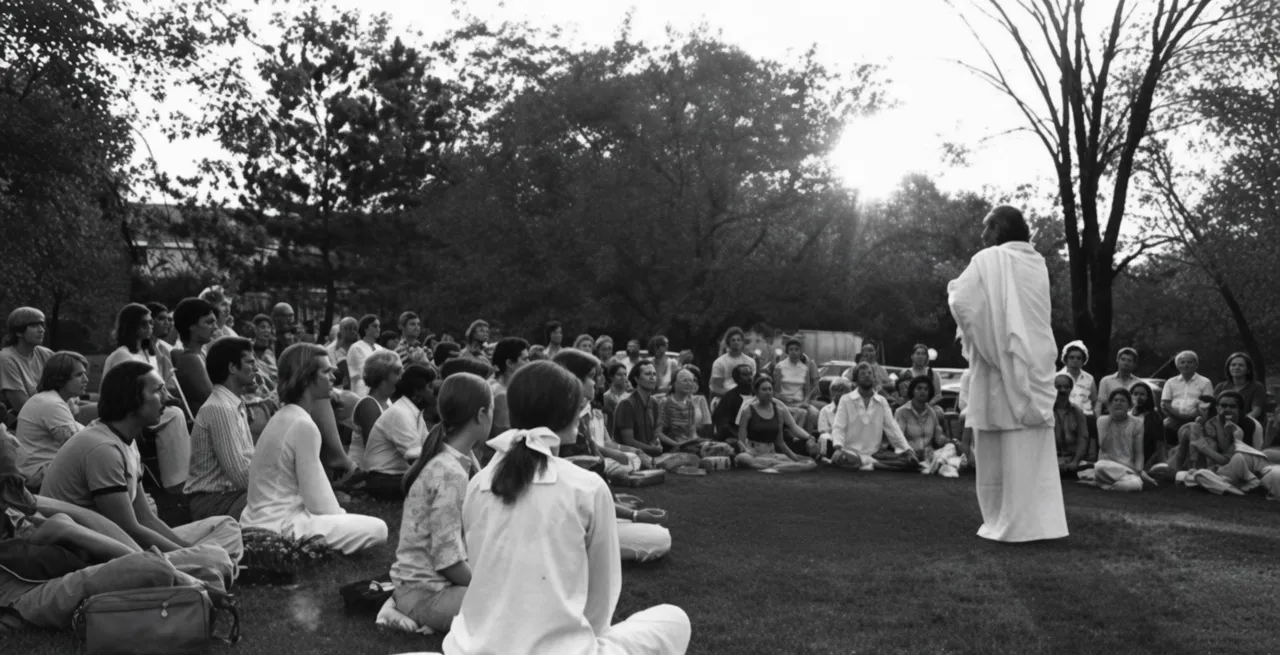
The Himalayan Tradition, as taught by H.H. Dr. Swami Rama, brings a deeper dimension to the understanding of wellbeing. Through Yoga, breath awareness, relaxation and meditation, attention gradually moves from the physical body towards greater awareness of the breath and mind. At the Ayurveda Centre, these practices may complement Ayurveda care where appropriate, supporting a more integrated understanding of the individual.
Yoga and mindful movement
support strength, flexibility and
physical wellbeing.

Breath awareness helps calm the
nervous system and brings greater
presence to everyday life.

Relaxation and meditation support
mental clarity, emotional balance
and inner wellbeing.
Explore perspectives from our Ayurveda physicians (Vaidyas), faculty and experts, translating Ayurveda and related practices into accessible insights for everyday health and wellbeing.
From understanding common health concerns to food and nutrition, seasonal routines, Panchakarma, Yoga, meditation and preventive wellbeing, these insights bring traditional knowledge into the context of everyday life.
Answers to common questions about Panchakarma, your stay and planning your visit to the Ayurveda Centre.
Panchakarma procedures are bio-cleansing (shodhana, purification) procedures that help to expel accumulated toxins from the body, whereas other treatments are palliative in nature, treating the body without removing the toxins.
Panchakarma includes five purificatory procedures for removing toxins from the body:
The most important benefit of the purificatory process is the removal of toxins from the body, which helps cells regenerate quickly, and the person gains good strength, immunity and vitality. Every system of the body starts to function normally, which helps in maintaining normalcy and better health.
Treatment is not recommended during the periods, but if they occur during a long stay, we can tailor the cleansing programme to the needs of the individual patient.
Panchakarma first relieves the body of toxins, and its healing effects begin to show gradually. In certain conditions, such as musculoskeletal problems, various kinds of arthritis and neurological problems, you may notice immediate relief and positive changes.
Yes. People in optimum health can also undergo Panchakarma. Due to faulty dietary habits and lifestyle, we accumulate toxins inside our body. Panchakarma is a natural detox procedure, so a healthy person can also join the programme for detox, relaxation, rejuvenation and promotion of health. It can increase immunity, vigour and vitality, which can prevent the onset of disease. Prevention is always better than cure.
Timings of individual treatments may vary depending on patient load and the slot allocated for therapy, before noon or after noon.
You can fly from Delhi to Dehradun (Jolly Grant) Airport, which is only 5 kilometres from our Centre. You can hire a taxi from the airport to the Ayurveda Centre at Himalayan Hospital and reach it within 10 minutes.
Smoking, alcohol and illegal drugs are strictly prohibited at the Ayurveda Centre, so it is advisable to quit these habits before you join the programme, and also to practise vegetarianism.
Yes. Depending on availability, you can extend your stay after discussion with your consultant physician.
Payment can be made on arrival by cash or credit card (Visa card for foreign currency). For advance booking, deposit 50 percent and inform us of the transfer details so we can verify receipt of funds. Please do not wire any funds until your booking has been approved by the Ayurveda Centre.
Generally, if the patient arrives before noon, treatment can be arranged on the same day. If arriving in the afternoon, therapy can be planned from the next day. We do not take new guests on Sundays and national holidays.
Please bring all relevant medical reports and clothing for daily use. Modest, casual, comfortable clothing is recommended. Please bring your own toiletries if you have a specific preference.
Have another question? Contact our team and we will be glad to help.
Wisdom Finds Meaning When It Is Lived.